
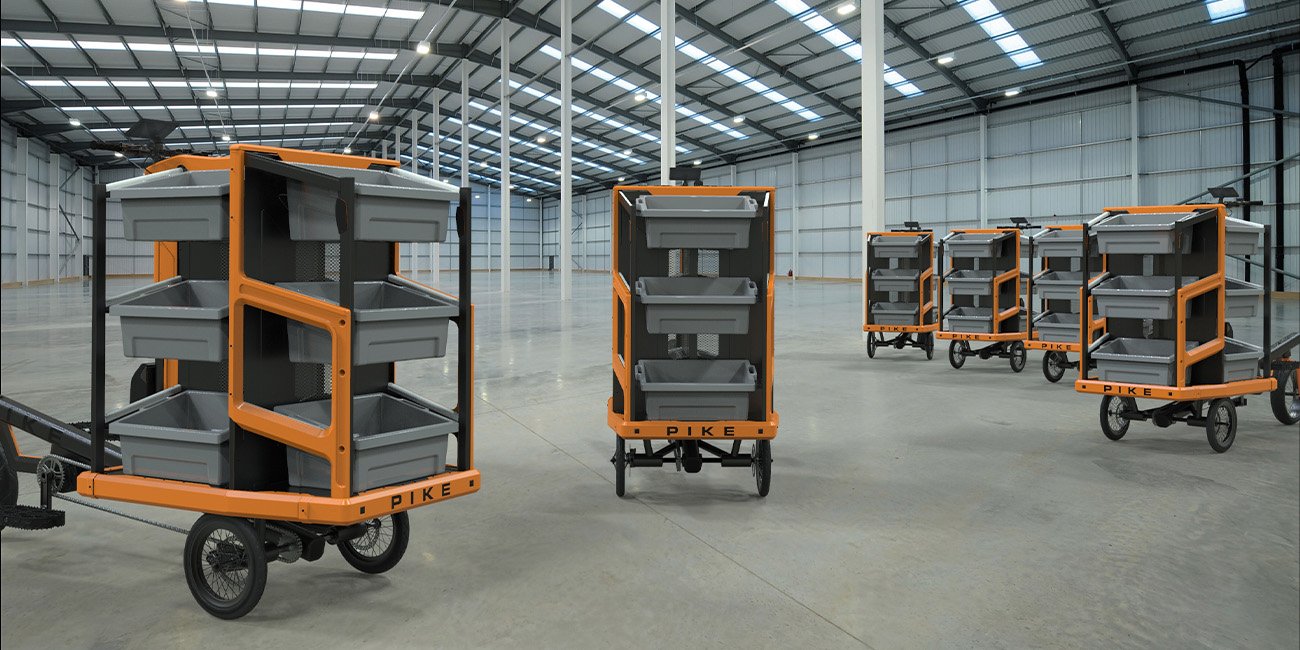
Pike: a bike for warehouse picking
Pike, developed with e-Novia, is the innovative bike designed to optimize efficiency and ease in warehouse picking.
About the project
This university project, launched by e-Novia, focused on the broader context of warehouse operations. Through an in-depth market analysis, we identified the opportunity to develop a tailored solution for the picking phase within medium-sized, horizontally developed warehouses. The project combined innovative design and engineering to address the specific needs of this environment, aiming to improve efficiency and mobility in a practical and sustainable way.
Mission
The mission of Pike is to improve mobility in warehouses by offering an efficient, sustainable, and user-friendly solution that accelerates operations. The goal is not only to speed up movement but also to reduce the margin of error, enhancing overall productivity and accuracy.
Challenges
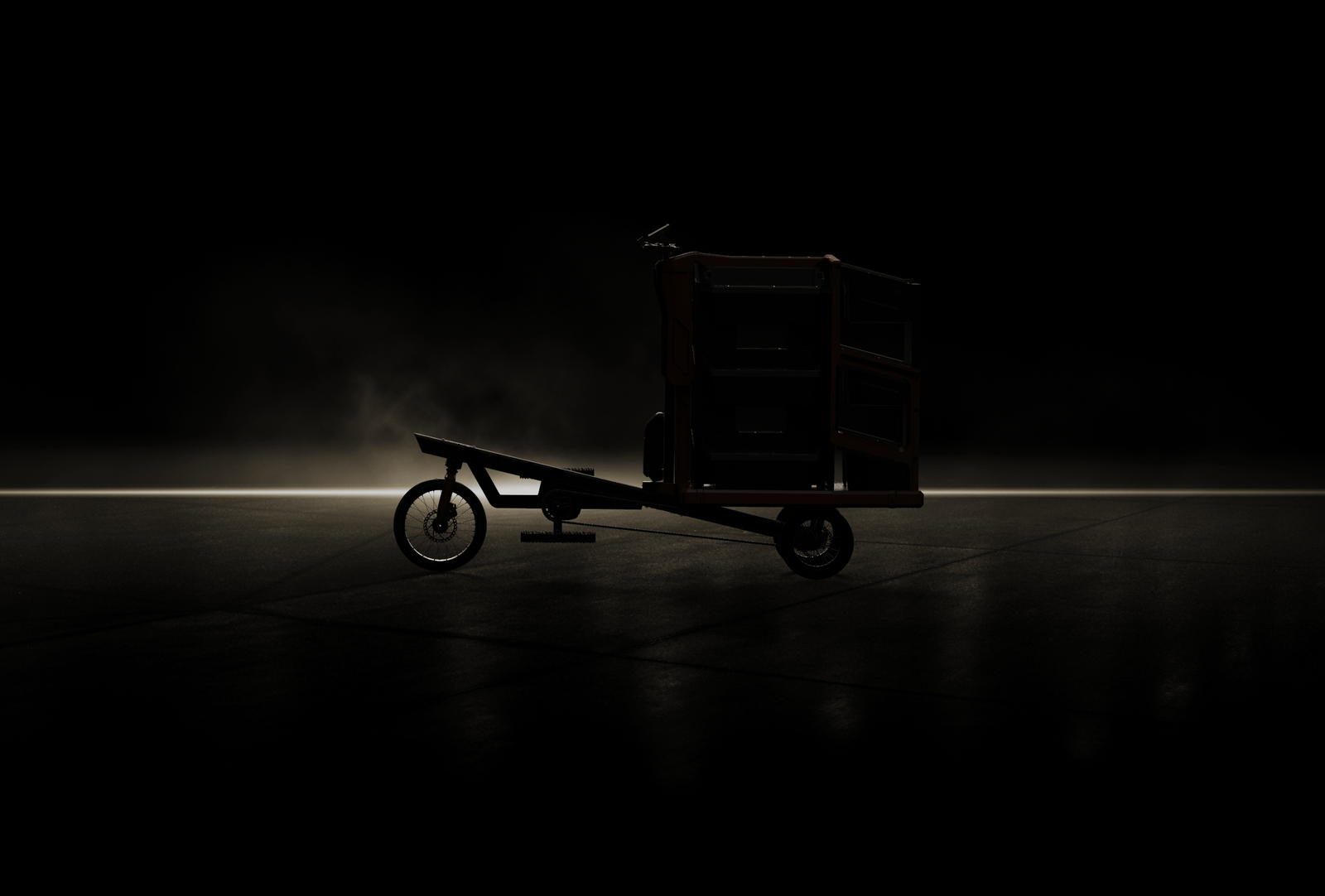
Introducing a bike into such a complex environment presented significant challenges. Integrating an electric bike into a warehouse is no simple task, as warehouses are highly regulated spaces. They host a mix of vehicles, including forklifts, pallet jacks, and pedestrians, all navigating through tight aisles with sharp turns and limited visibility. The layout of many warehouses creates further obstacles, with restricted space and speed limitations. Moreover, as a workplace, ensuring the safety of all workers is a top priority. The challenge goes beyond just the bike’s environment; it also extends to the specific task it was designed for. The chosen function within the warehouse required a solution that could operate efficiently while handling the complexities of the job, all while maintaining safety and performance standards.
Research
The initial analysis revealed the complexities due to the environment and the specific task.
Navigating within a warehouse designed for package handling requires excellent maneuverability, as well as a reliable braking system to ensure safety, particularly in situations where sudden stops are needed. Beyond managing the vehicle itself, the warehouse environment requires the development of tools and features that enable smooth interaction with other equipment and personnel.
The picking activity, a critical part of the workflow, is where most errors occur due to the use of non-specialized tools and tight time constraints. Currently, pickers move on foot, dragging a cart while retrieving, scanning, and sorting packages. This process, coupled with the challenges of the warehouse layout, makes it clear that a more efficient, specialized solution is needed.
Concept
The design process started with an in-depth exploration of visual references and initial ideas.
Moodboard
The moodboard reflects a rugged aesthetic, featuring colors, finishes, and lines typical of products designed for industrial environments. This style not only resonates with the workspace but also conveys a sense of durability, emphasizing impact resistance and reliability.
The product
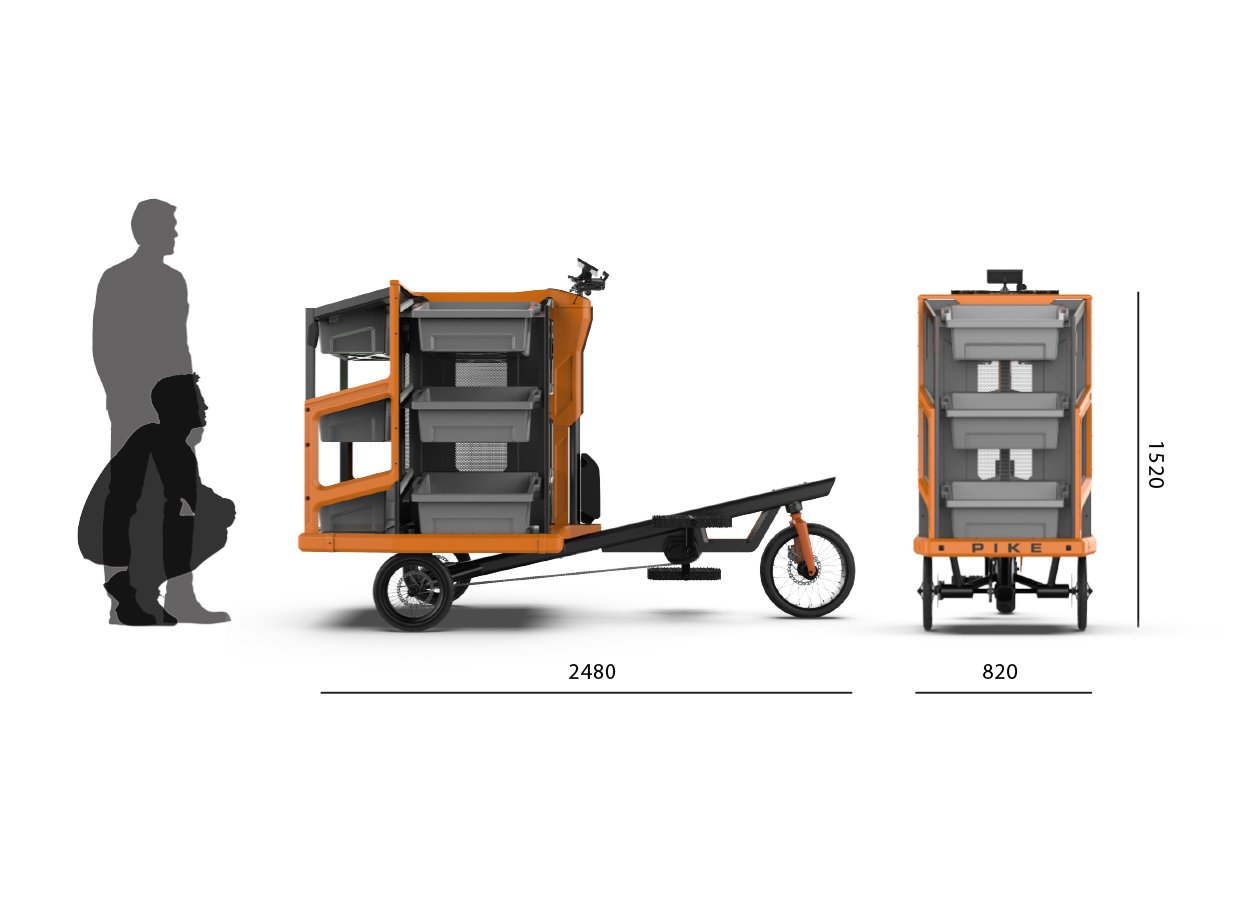
Pike is a pedal-assist cargo bike designed to improve work processes in regulated and complex environments, such as warehouses. Its key features include rear-wheel steering, standing pedaling, and visual and auditory feedback. The rear-wheel steering helps with maneuverability in tight spaces, while standing pedaling offers more comfort and ease during use. The visual and auditory feedback systems provide helpful cues to ensure safety and smooth operation. These features work together to make the bike more practical, safe, and efficient in challenging work environments.
Key Features
Pike is designed with essential functions to improve efficiency, control, and user experience in warehouse operations.
Usability
Pike is designed to enhance the overall user experience in the warehouse by combining ease of use with efficiency. Its compact size ensures that the bike can easily navigate through narrow aisles and tight spaces, making it ideal for environments where space is limited. Ergonomic features like standing cycling and intuitive controls allow the operator to perform tasks with minimal effort. The bike’s design and integration with the warehouse management system ensure smooth workflows, improving both the speed and accuracy of the picking process. This user-focused approach makes Pike not just a functional tool, but a valuable asset that improves the work environment.
Standing Cycling
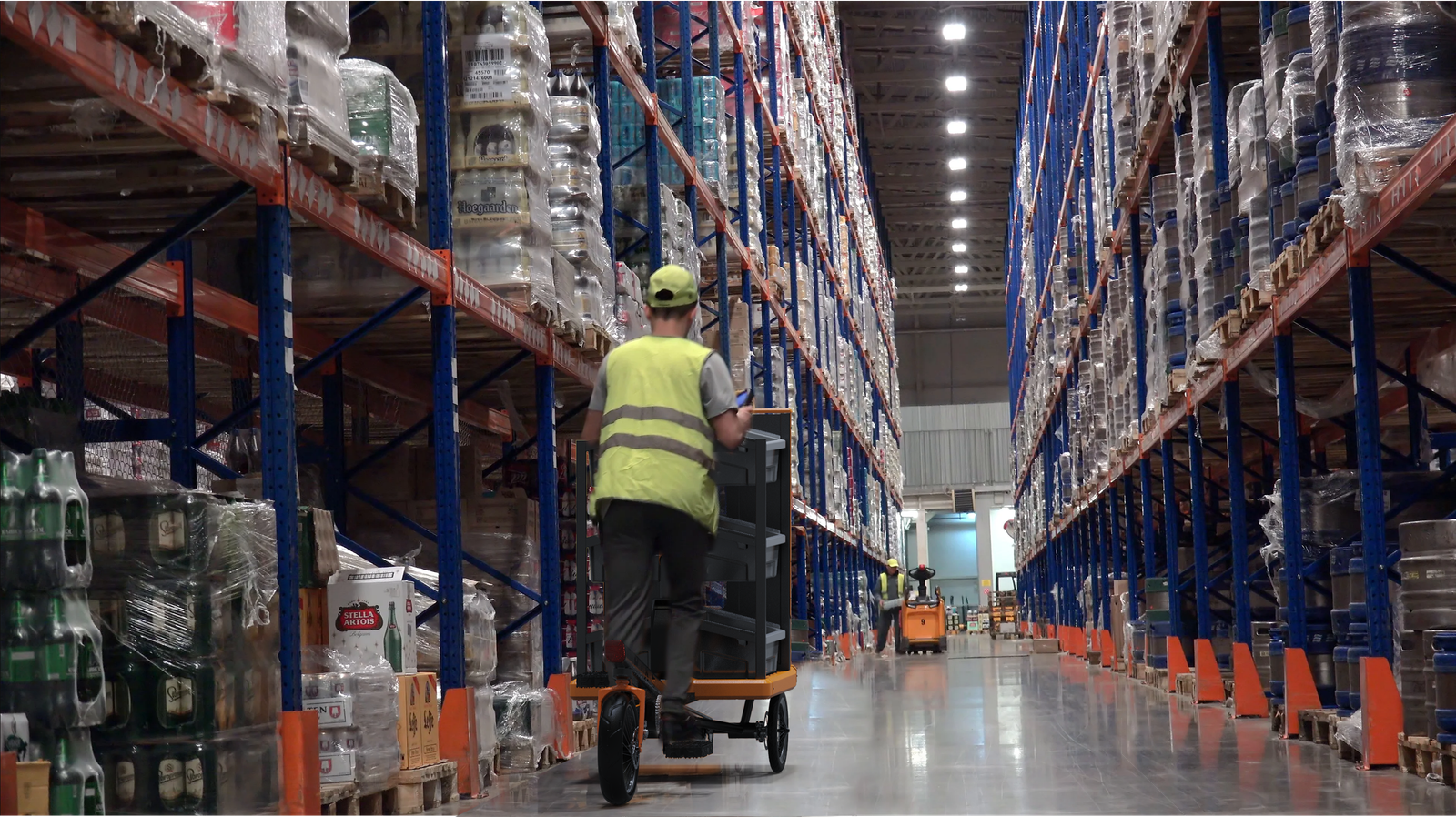
The choice of standing cycling was driven by the specific needs of warehouse pickers, who often make short, fragmented movements to retrieve packages. This design eliminates the need for frequent mounting and dismounting, as the absence of a seat allows for quick transitions. The flat, even surfaces typical of warehouse environments make standing cycling a natural fit, providing better visibility for the operator. To improve comfort and optimize cycling efficiency, specialized pedals were selected to offer enhanced control and support for the user’s movements.
Visual and Auditory Feedback
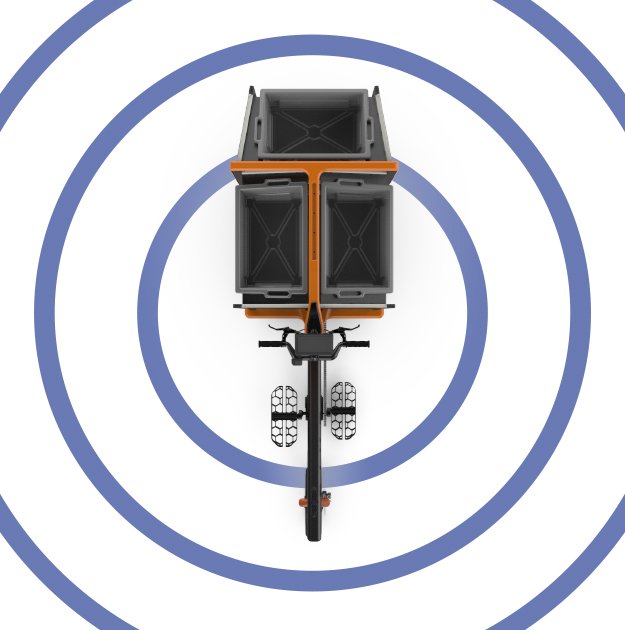
To eliminate the need for a paper sheet with package collection instructions, the bike is connected to the warehouse management system and guides the operator through this process using a display mounted on the handlebars. This integration with the system optimizes the arrangement of packages in the sorting boxes. In addition to the bike, the operator wears a glove with an RFID reader, removing the need for a barcode scanner and keeping both hands free. Once the correct package is picked, the corresponding box will light up green. RFID readers on the bike track whether the package is correct and placed in the right container, providing visual (green or red light) and auditory feedback to ensure efficient handling and minimize errors.
Accessories & Add-ons
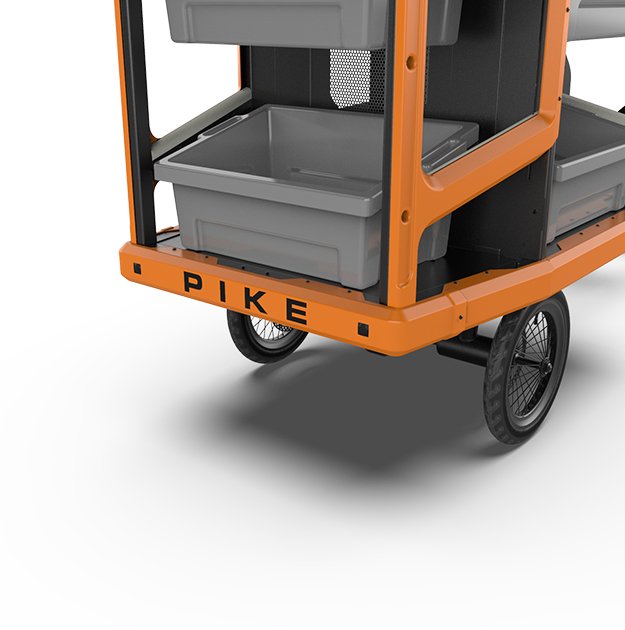
To enhance safety and integrate the bike into warehouse environments, blind spot cameras have been added. Additionally, the bike can connect to indoor triangulation systems, making it visible to other vehicles in operation.
Technical Aspects
The product involved a thorough development process, with a strong focus on both production techniques and mechanical design.
Rear-Wheel Steering
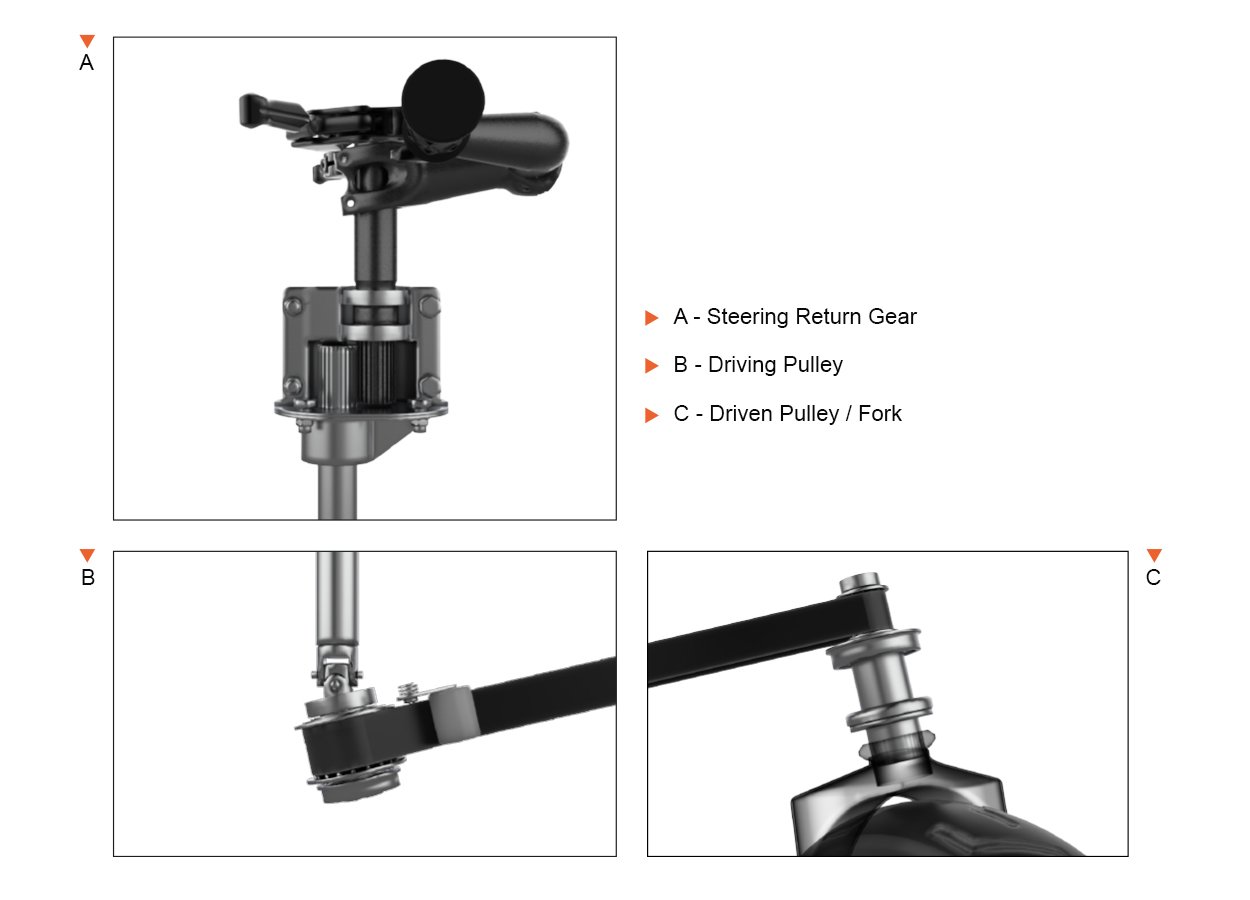
Inspired by vehicles designed for maneuverability in similar environments, the decision was made to implement rear-wheel steering on Pike for optimal control. To ensure proper functionality, the system includes a mechanism positioned at the top, which reverses the steering actions to the rear wheel. This setup operates through a drive pulley connected to a driven pulley on the rear wheel fork, with a 1:1.5 ratio to enhance the steering angle. This innovative feature significantly improves handling and adaptability in tight, dynamic spaces.
Production
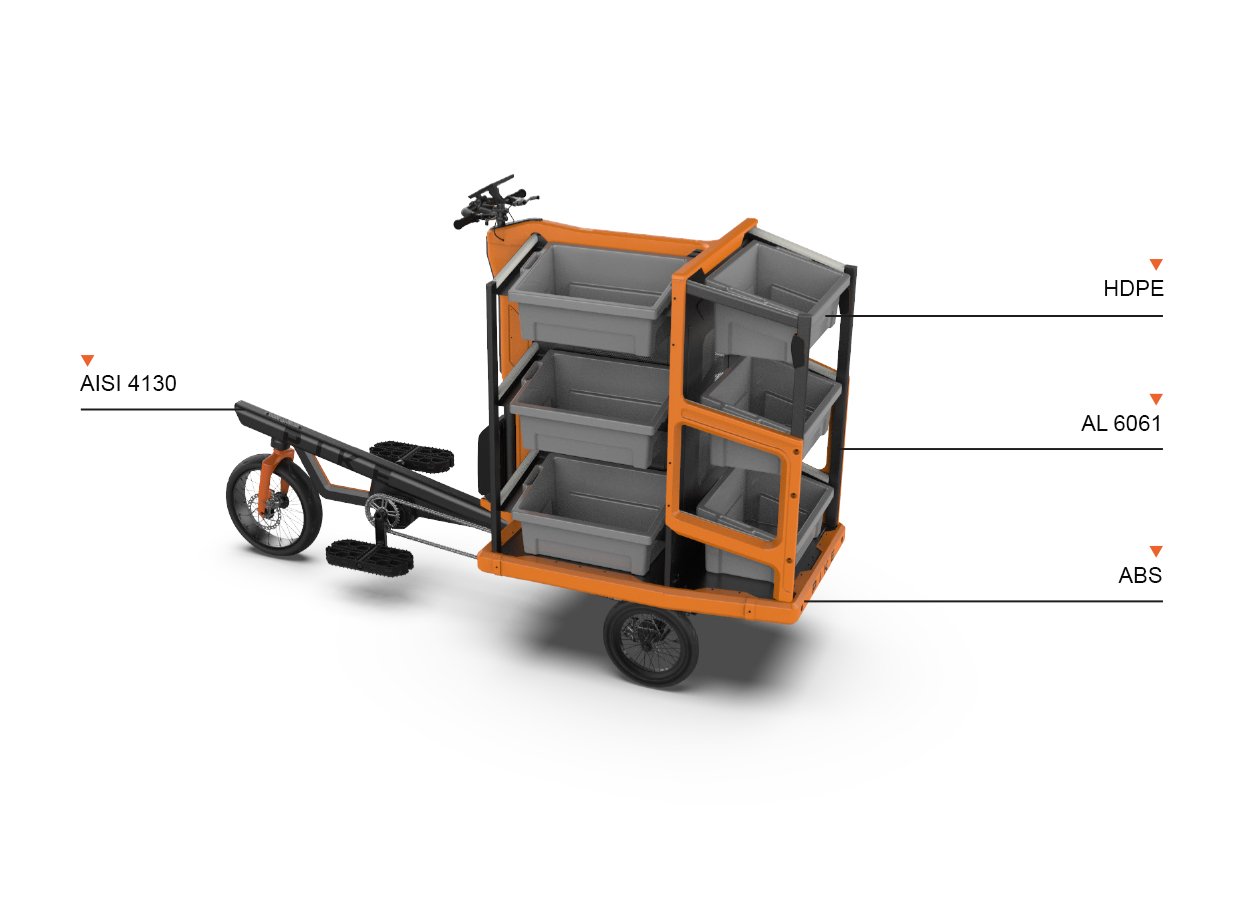
The frame is mainly steel and aluminum, with welded joints in the steel sections and bolted connections elsewhere for stability. The outer shells are injection-molded ABS, while the sorting boxes are made of injection-molded HDPE for durability.
Sorting Boxes Design
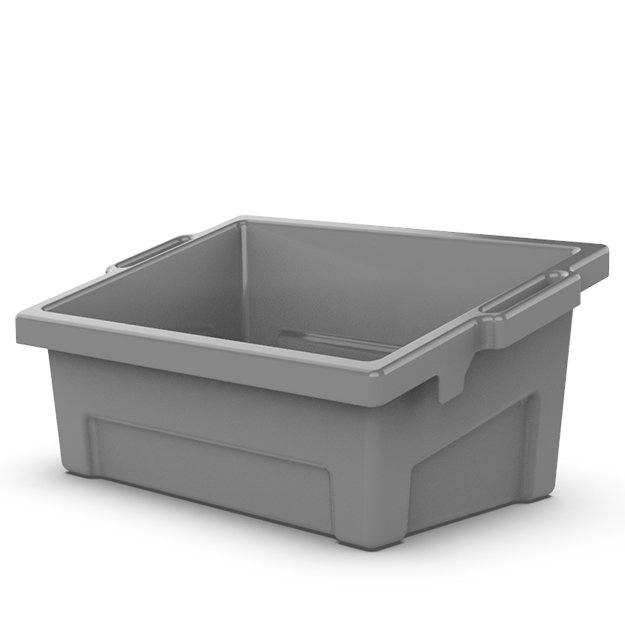
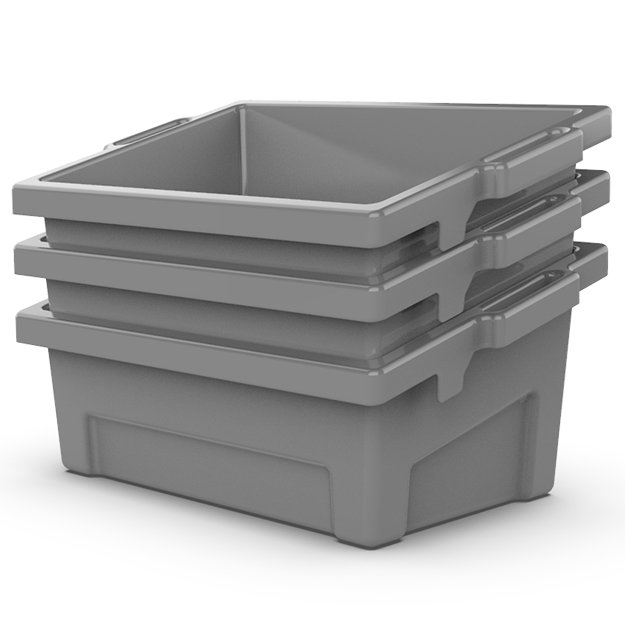
The custom-designed 48L sorting boxes are built to fit securely onto the supporting rails, ensuring stability and ease of use. They feature ergonomic handles for better grip, are sized for efficient transport, and have a stackable design for optimized storage. FEM analysis was conducted to ensure their durability and reliability.
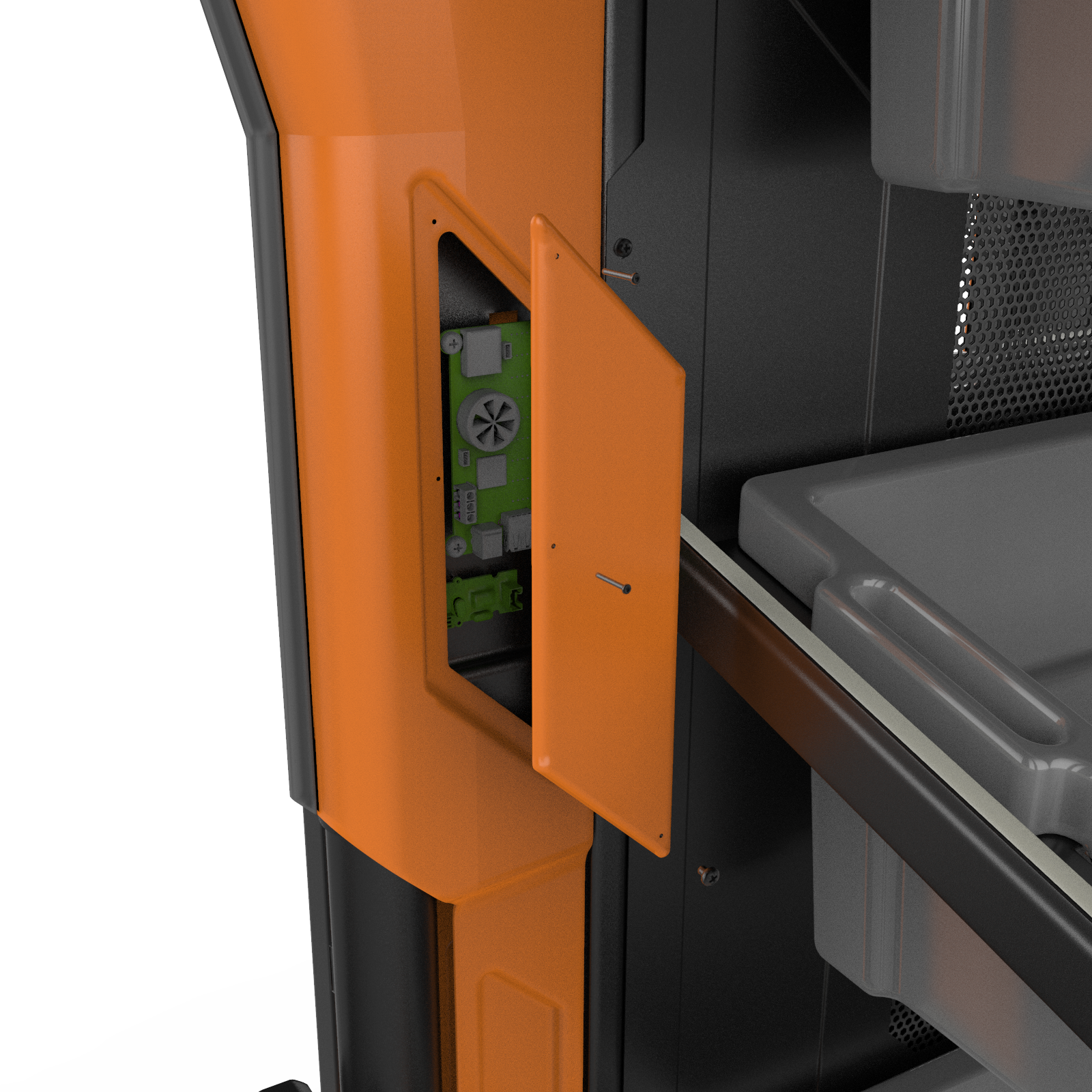
Maintenance
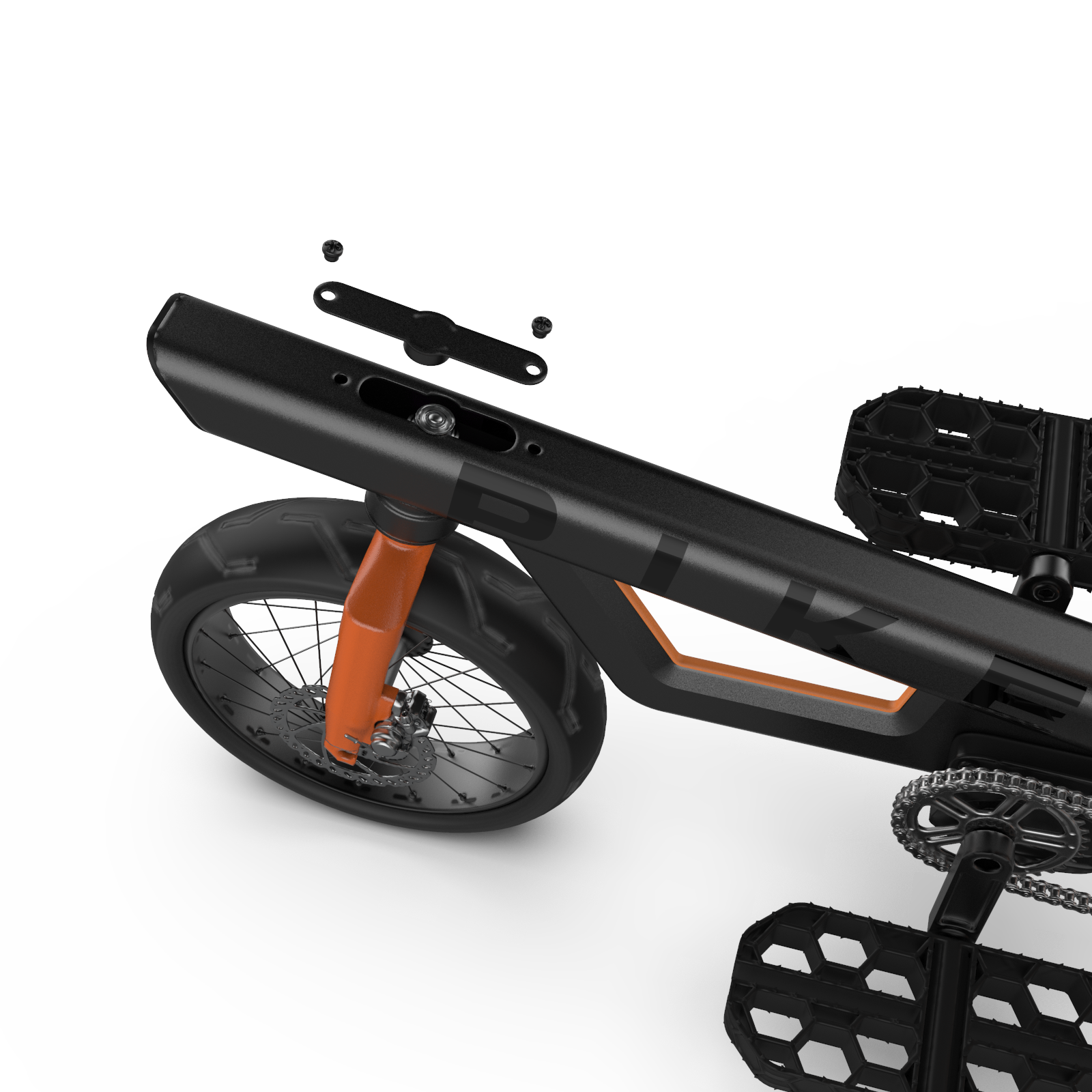
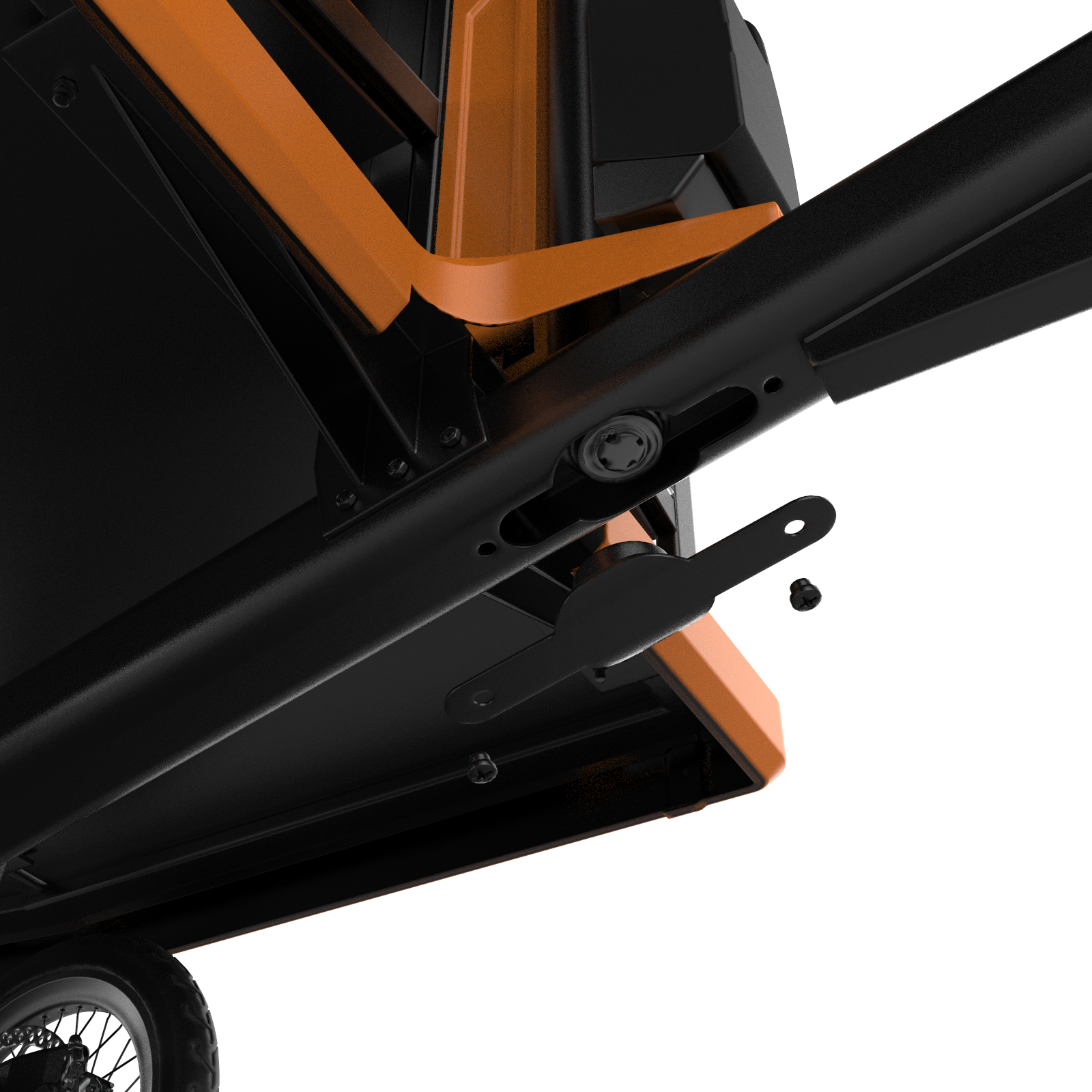
The product is designed for easy maintenance, with a focus on quick access to the most wear-prone components. This ensures fast replacements and minimal downtime, keeping operations efficient and reliable.