
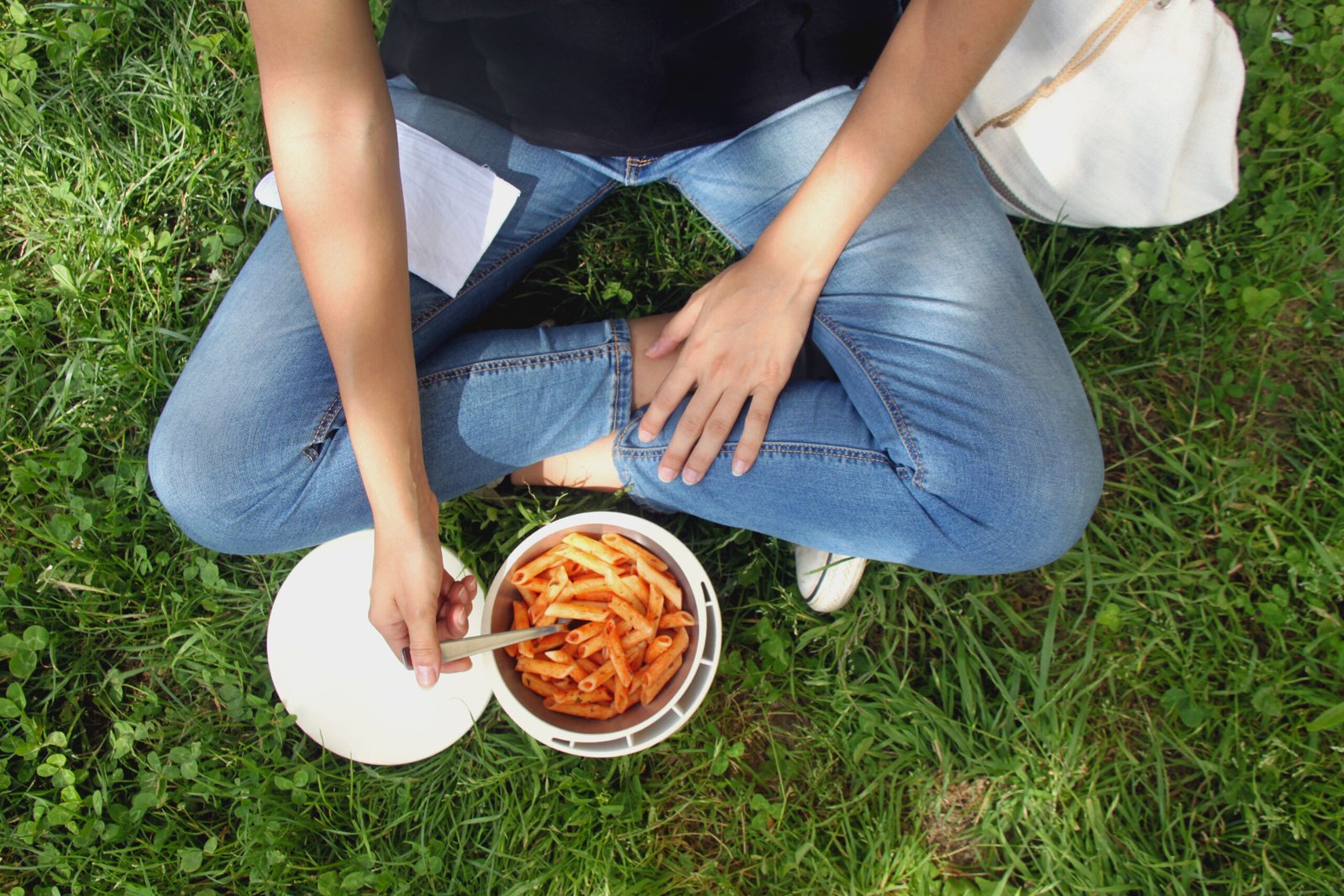
Balance: a lunch box for mindful meals.
Balance, developed during my second year at university, is an innovative lunch box designed to enhance the lunch break experience through efficient, microwave-free heating.
About the project
Balance is an innovative tableware design project created during my Industrial Product Design degree at Politecnico di Milano. The project aimed to design functional yet uncomfortable products, exploring the intersection of usability, design challenges, and user experience in tableware design.
Mission
Balance redefines the lunch break experience by introducing tableware that encourages a more mindful approach to mealtime. Designed to function without a microwave, it allows users to heat their meals even in places where traditional appliances are unavailable. By subtly altering usability, Balance extends the duration of the lunch break, transforming it into a more intentional moment—one that promotes better time management, awareness, and a deeper connection with food and daily rituals.
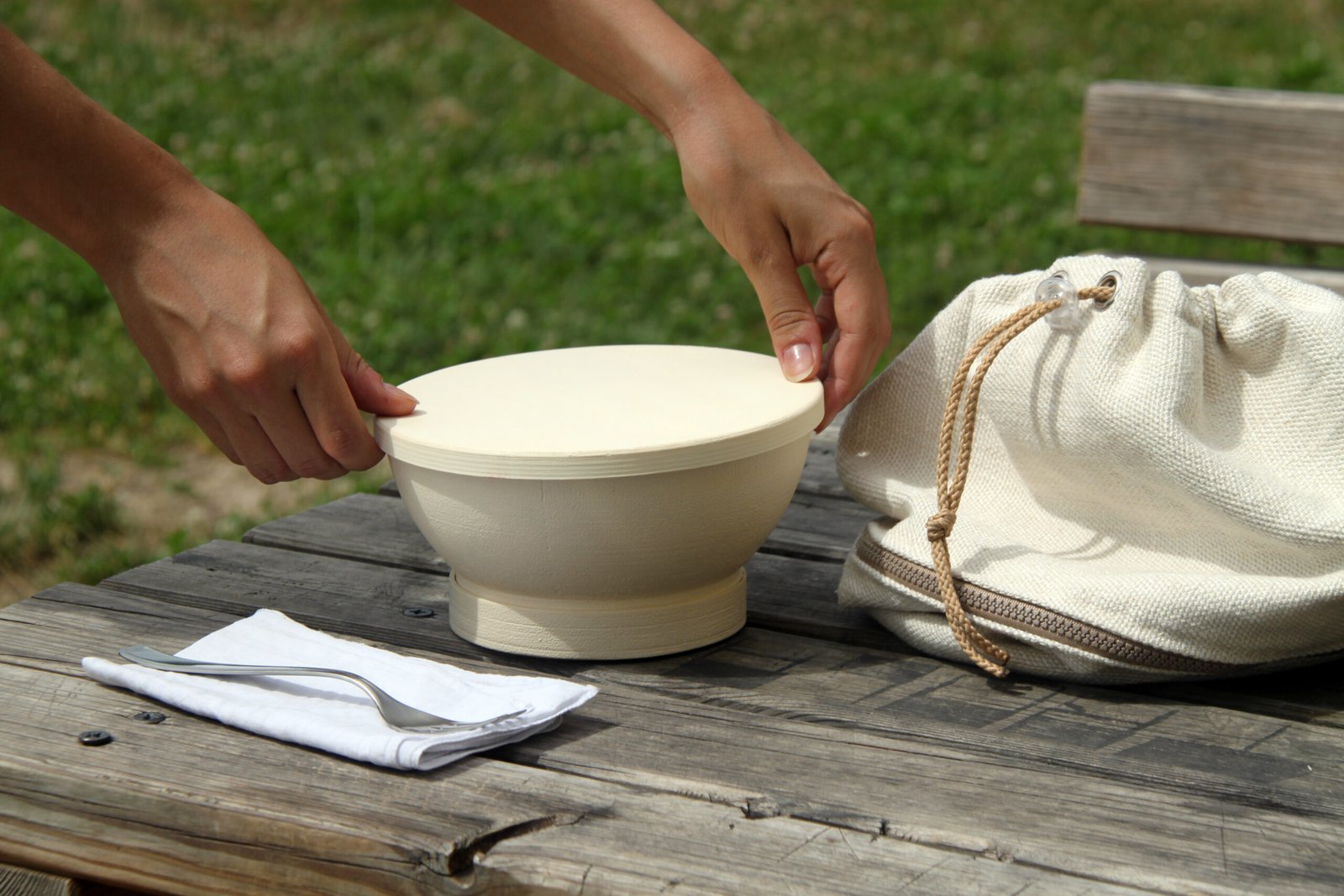
Challenges
Balance challenges conventional tableware design by carefully balancing discomfort and user experience. The project explores how subtle design disruptions can influence user behavior, encouraging specific actions and habits without causing frustration or abandonment.
Research
Research played a key role in shaping the direction of Balance. We explored alternative ways to heat meals slowly, from solar panels to USB-powered solutions. Our biggest breakthrough came with zeolite, a material that generates intense heat when it reacts with water. This led us to deeper testing—studying its safety, including toxicity levels, and experimenting with heat duration and how much water it could effectively warm. This research was essential in making sure the final design not only influenced user behavior but also provided a practical and innovative alternative to traditional reheating methods.
Concept
The process included research, experimentation, and ideation. We explored various materials and heat sources, testing different approaches to ensure functionality, safety, and efficiency.
Moodboard
For the moodboard, we drew inspiration from natural elements to reflect the eco-friendly and organic feel we aimed for in the design. We focused on materials and textures that evoke simplicity and a connection to nature.
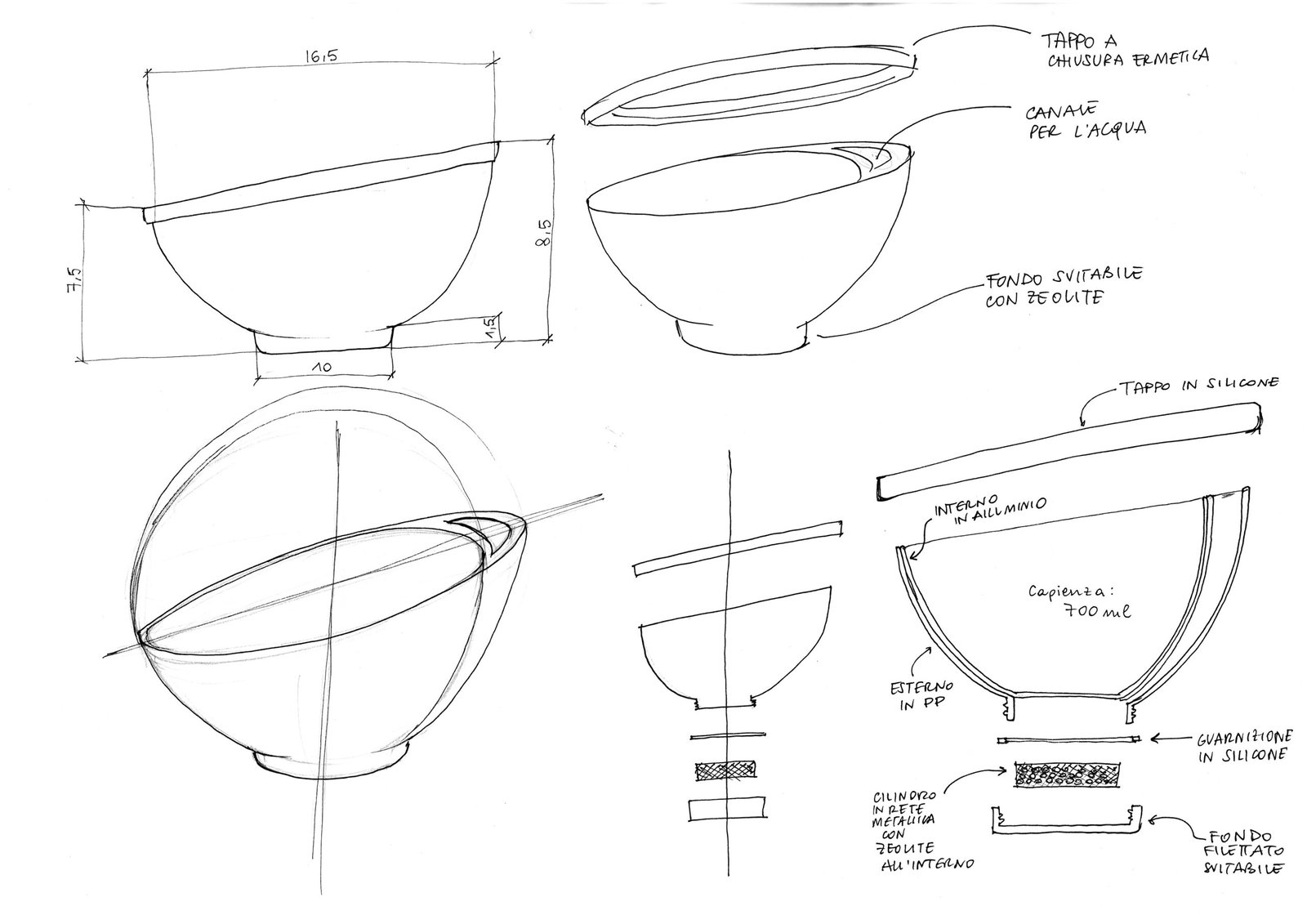
Product Definition
During the concept phase, we began defining the shapes, capacity, and materials of the product. Once we identified the heat source and understood the amount of heat it generated, we focused on selecting materials that would enable efficient heat transfer inside the container while also providing heat insulation on the exterior. This was essential to maximize the product’s efficiency and ensure user safety, preventing the risk of burns.
Key Features
Portable, microwave-free heating, efficient heat distribution, insulated design, and user-friendly operation.
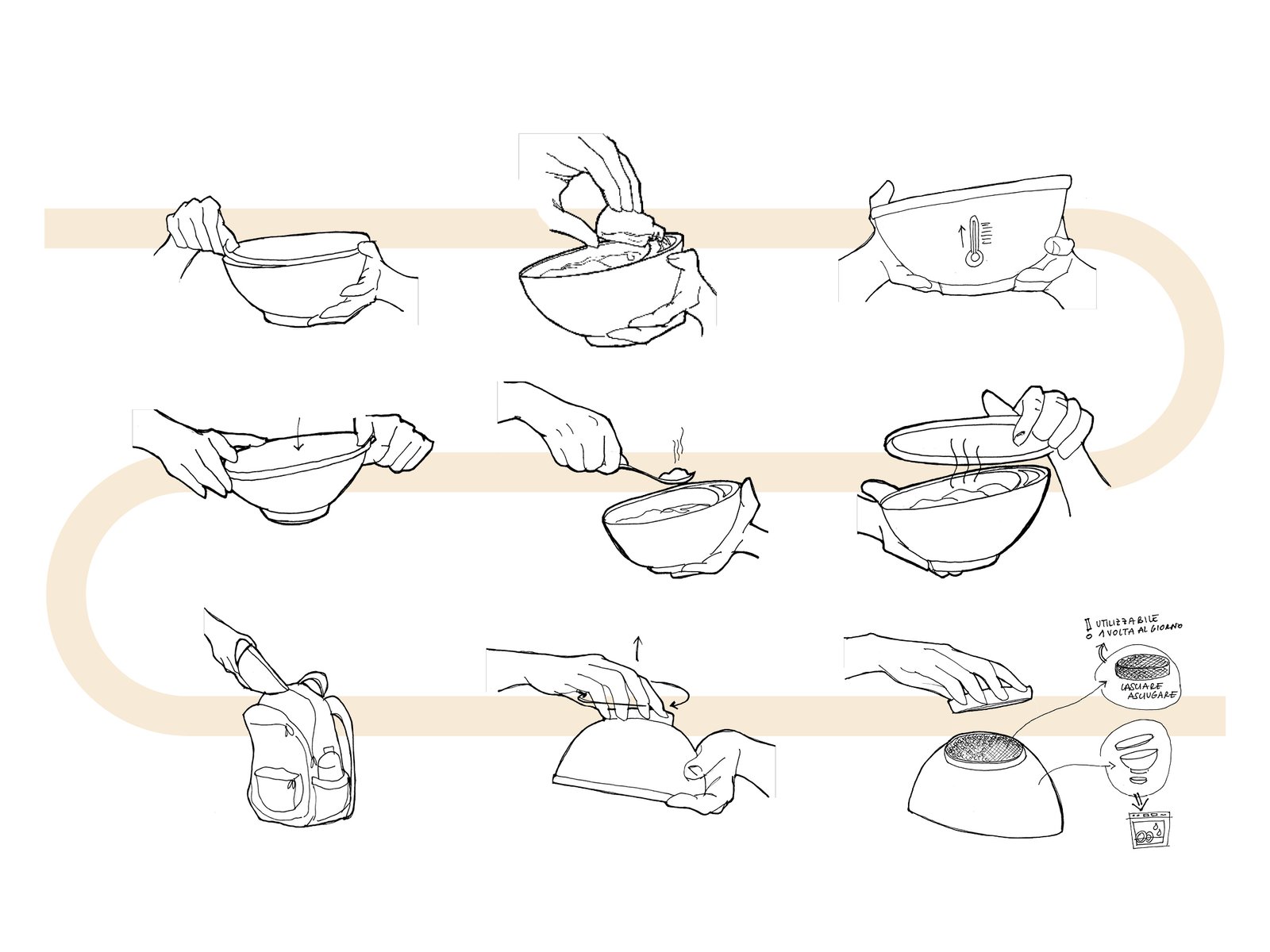
How It Works
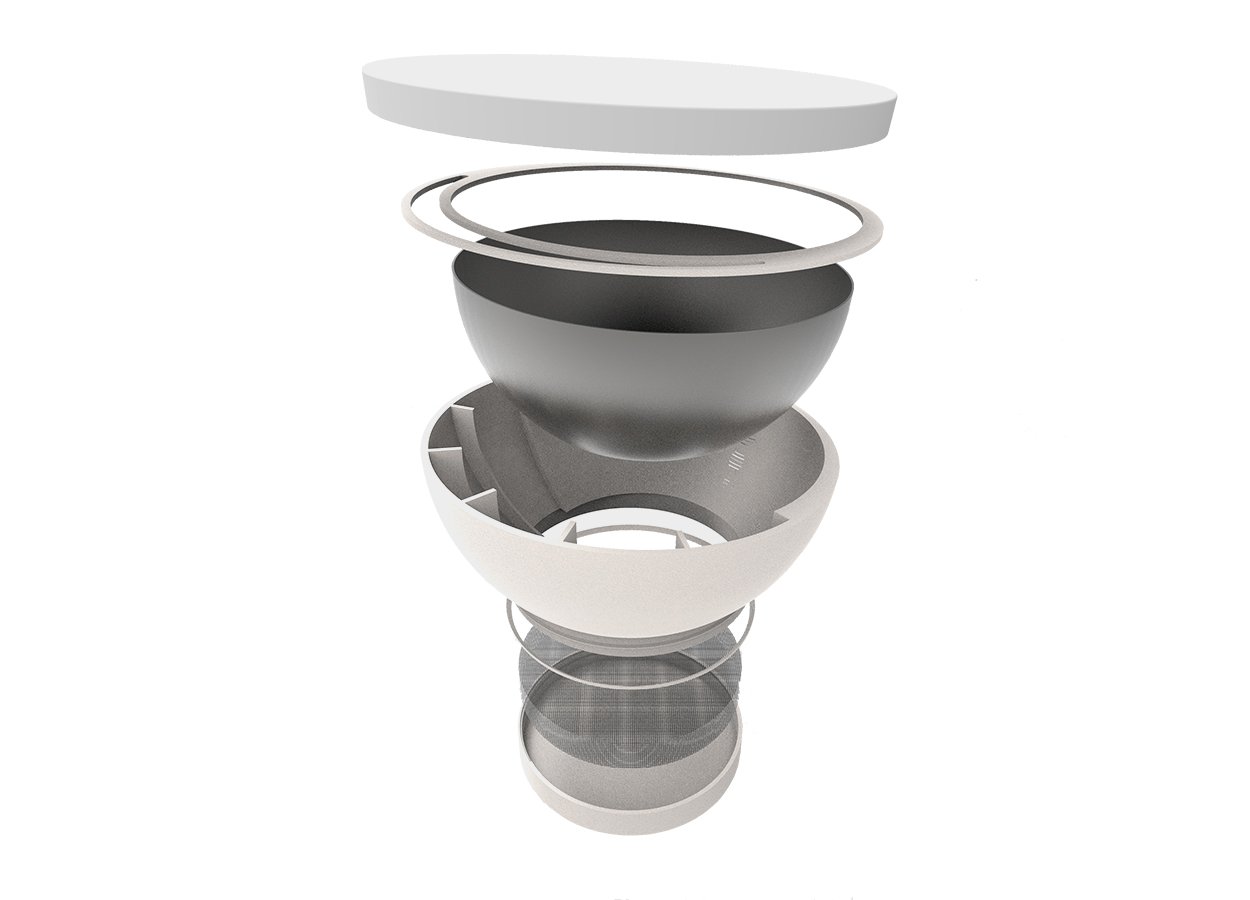
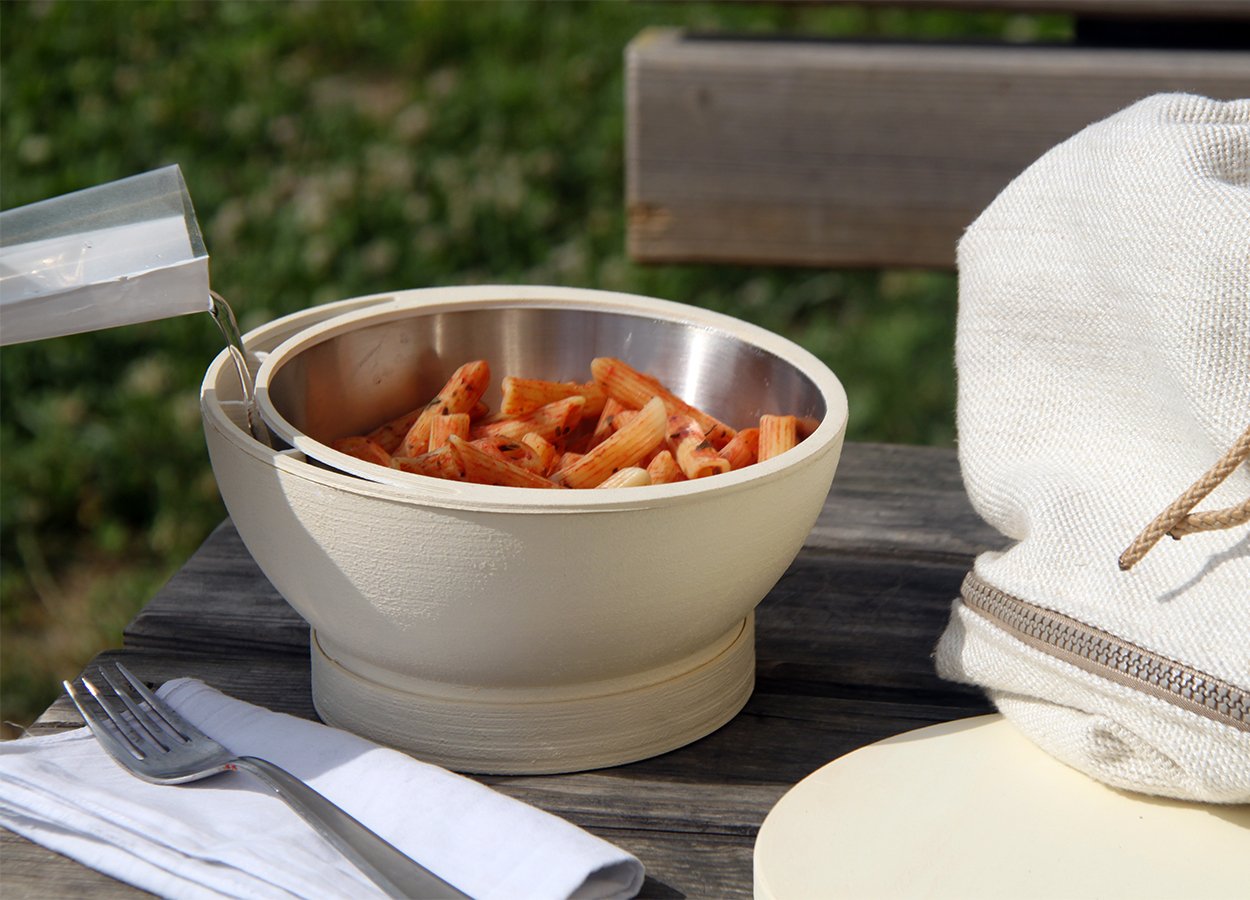
Using Balance is easy. To prepare, place the zeolite pod at the bottom of the container and fill the aluminum bowl with food. When ready to use, open the lid and pour water into the cavity to activate the zeolite reaction. Close the lid and wait 10 minutes for your meal to heat up.
Materials
Heat transfer within the lunch box has been optimized through careful material selection, designed to maximize thermal efficiency and safety. Inside, it features conductive materials like stainless steel for the zeolite mesh and aluminum for the inner bowl, ensuring fast and even heat distribution. The insulated inner chamber keeps food at the ideal temperature, preventing heat loss for a better mealtime experience. Externally, except for the gaskets, the components are made of PP 05 (polypropylene) through injection molding, offering both lightness and durability. The lid is made of silicone, providing a secure and heat-resistant closure.
The prototype
The functional prototype was essential in refining the design. It allowed us to assess the dimensions, user experience, and the amount of food the lunch box could hold. Since it was fully functional, we were also able to test the model in real conditions to evaluate its performance and usability.
Packaging
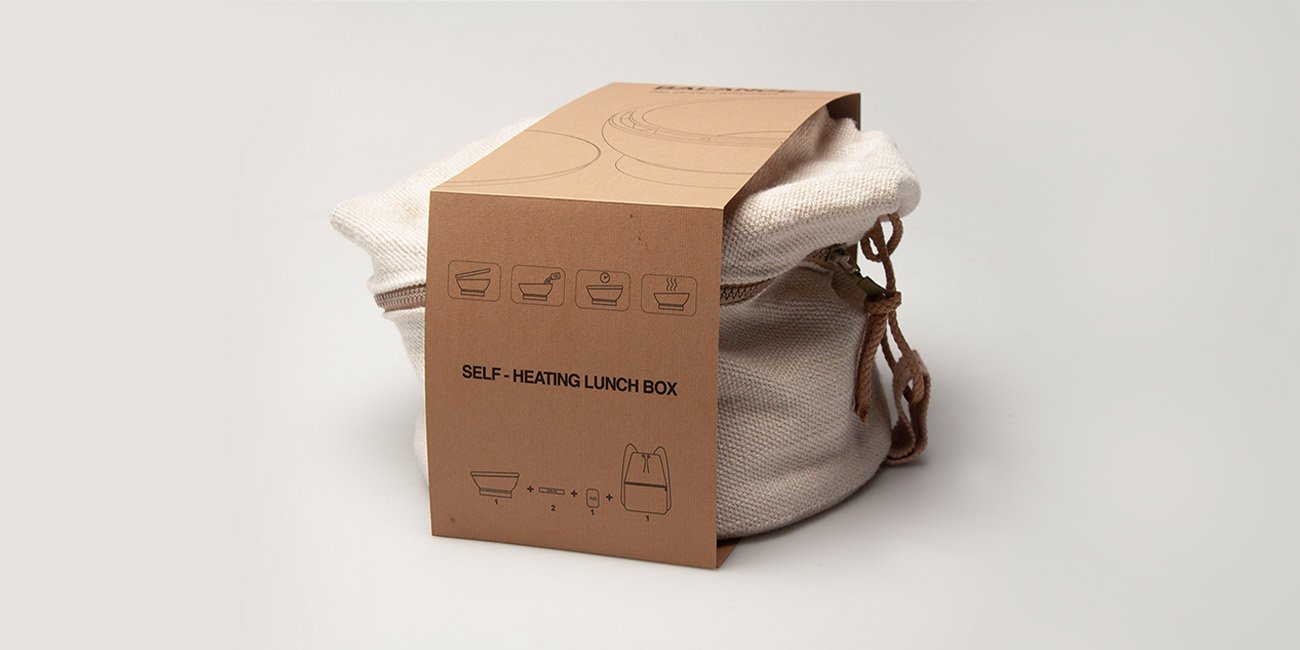
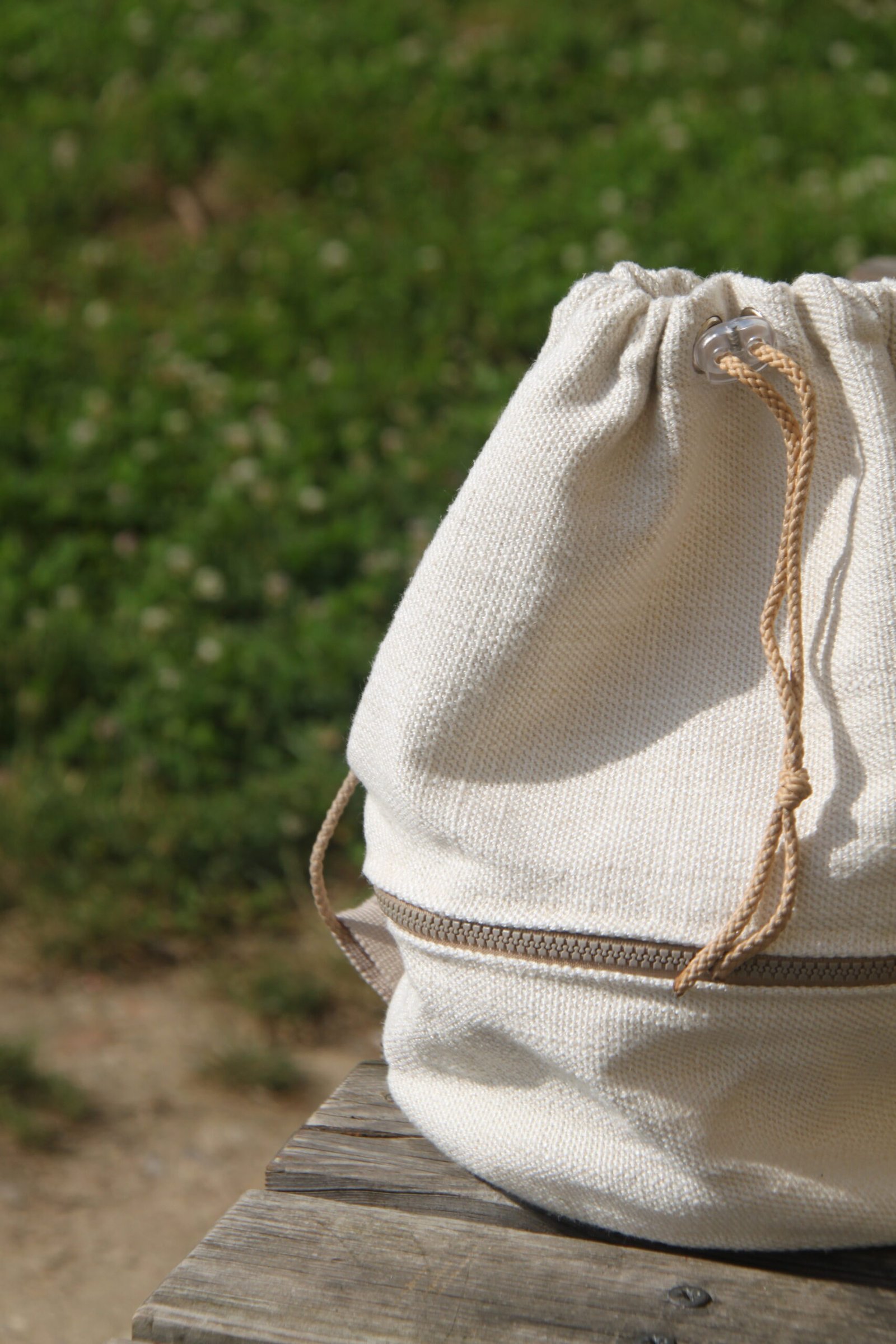
Balance’s packaging combines functionality and design, featuring a cardboard label for clear instructions and a custom backpack for easy transport.
Cardboard Packaging
We designed a cardboard packaging primarily for product presentation rather than industrialization. It includes essential usage instructions, ensuring clear communication of how Balance works while enhancing the unboxing experience.
Fabric Packaging
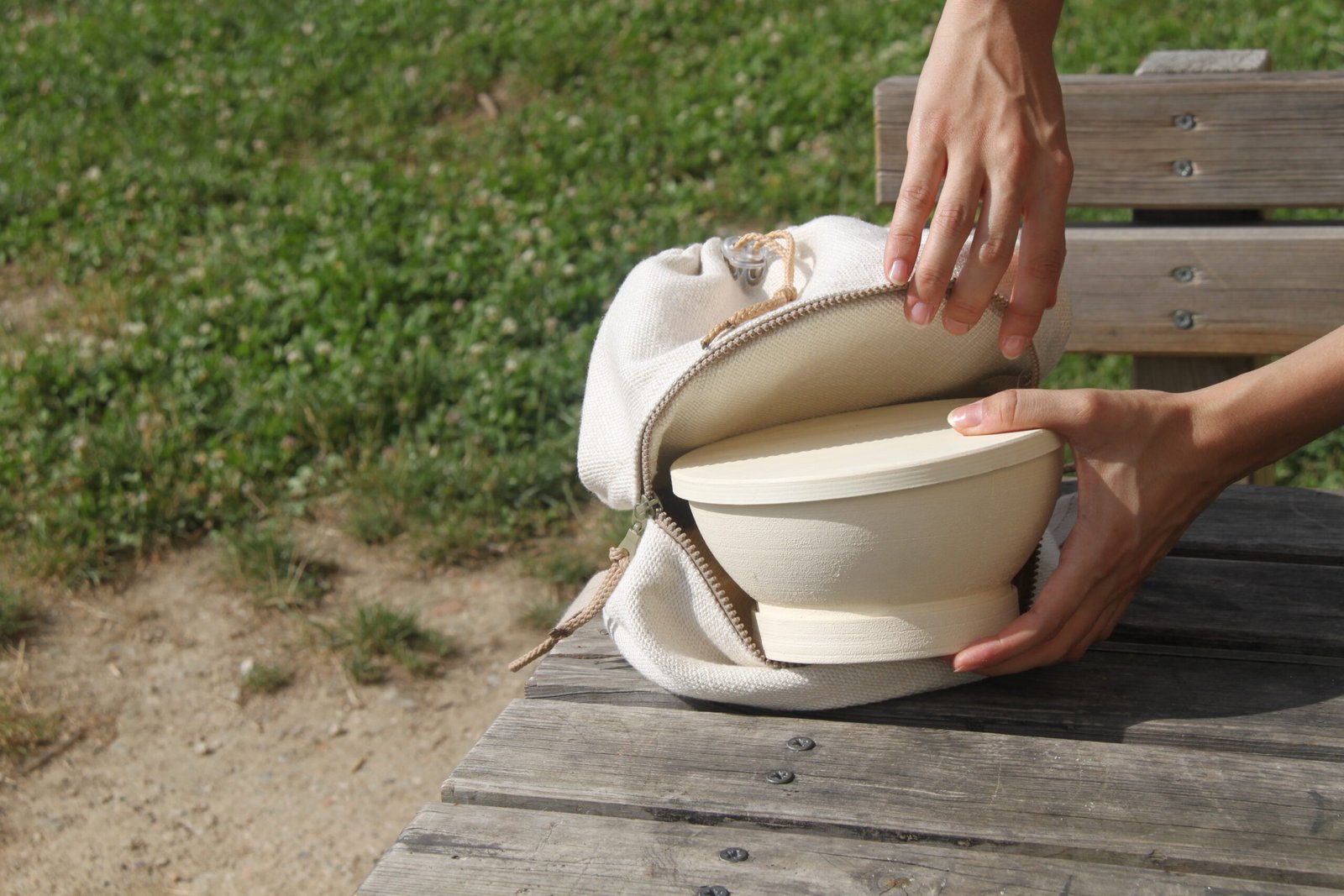
In addition to the cardboard label, we designed a backpack to make Balance easy to carry for outdoor lunch breaks, even outside the office. It features a dedicated compartment for the lunch box and an extra storage area for accessories.